The rules of the show

How to play

Everything you know about chess, bent round a circle, played all at once and turned up to ten.

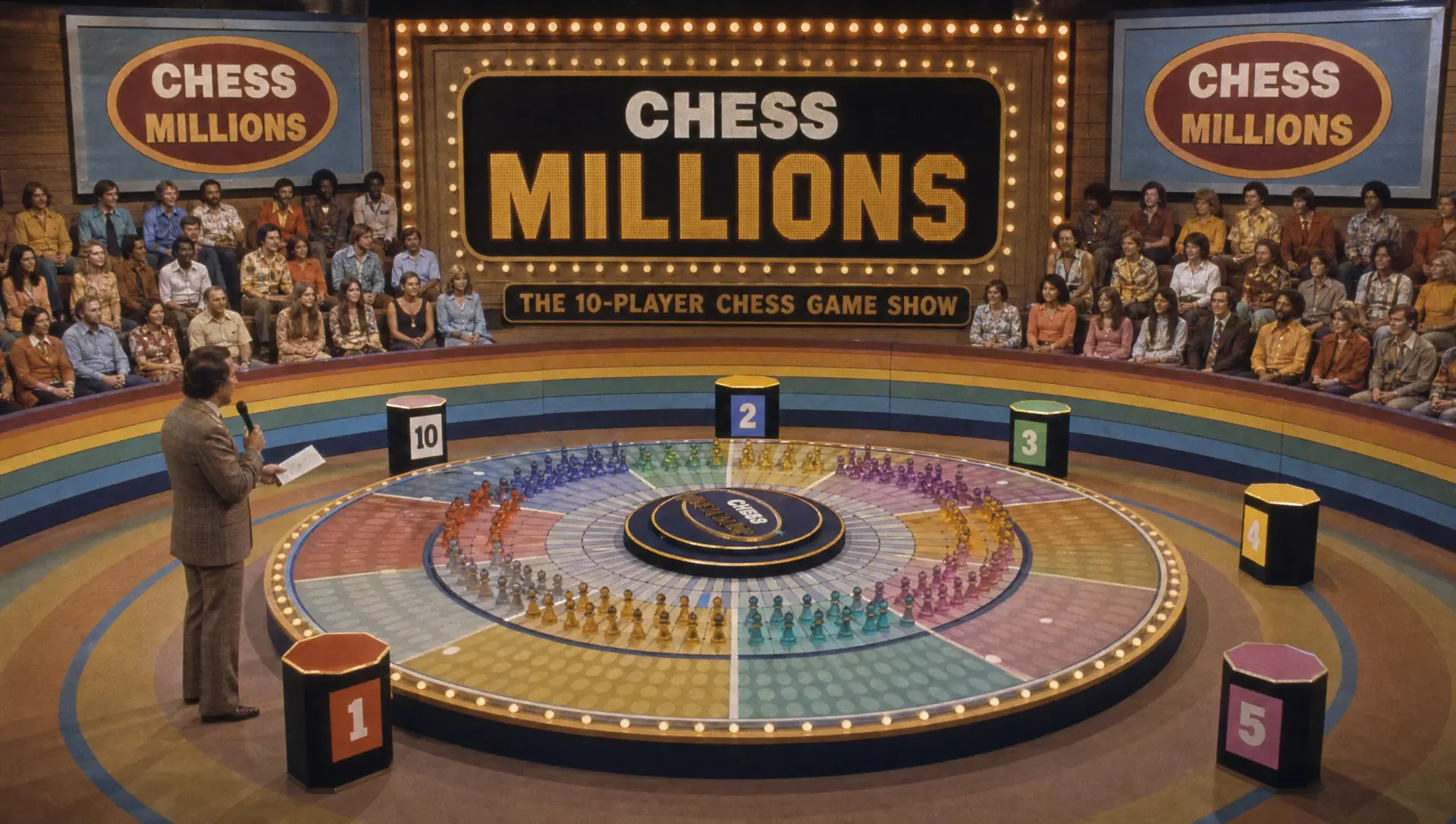
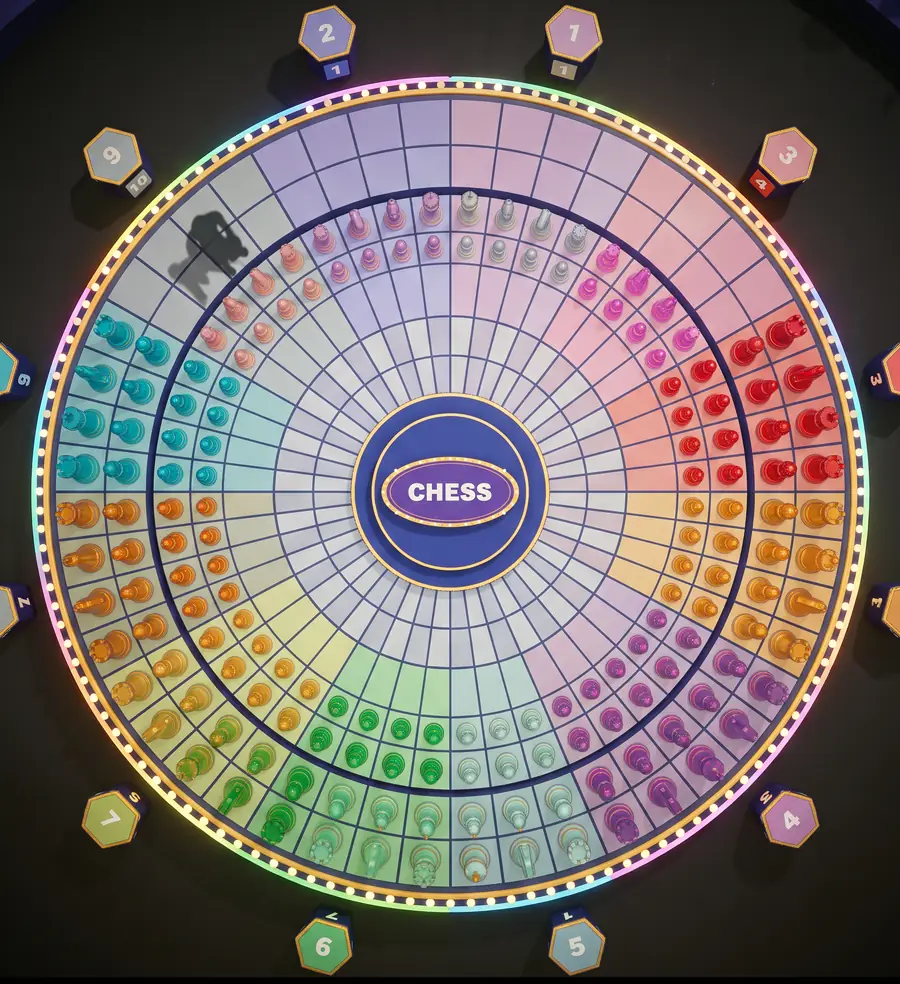
The round board from straight above: ten pastel armies, eight rings and the hub in the middle

1 · The board

Ten players, one round board

The board is a disc of eight rings, each split into ten wedges: one wedge for each seat. Your sixteen pieces start on the two outer rings of your wedge, like the back ranks of an ordinary game. In the middle is the hub, a single square any piece can pass through to cross the board.

  • Pawns march inward to the hub and back out the other side. One that reaches the outer edge in another player's wedge becomes a queen.
  • Rooks slide round the rings and along the spokes; bishops slide on the diagonals.
  • Knights jump in their L, queens do both, and kings step one square any way.
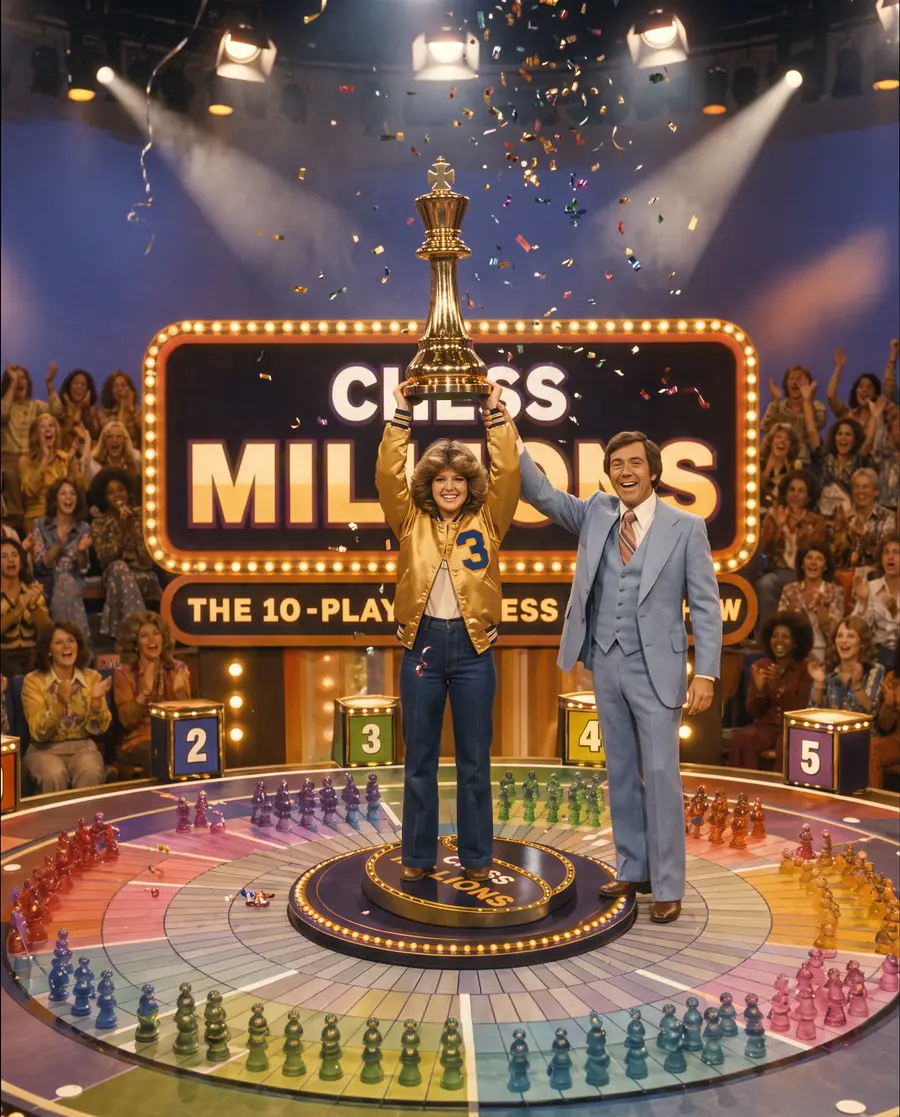
The champion lifts the golden king trophy as confetti falls

2 · Winning

Take a king, take the army

There's no check and no checkmate: kings are captured like any other piece. Take a king and every piece that player had, pawns to queens, changes colour and fights for you. One capture can double your army; lose your own king and all of yours goes to whoever took it.

The last king standing wins the show.

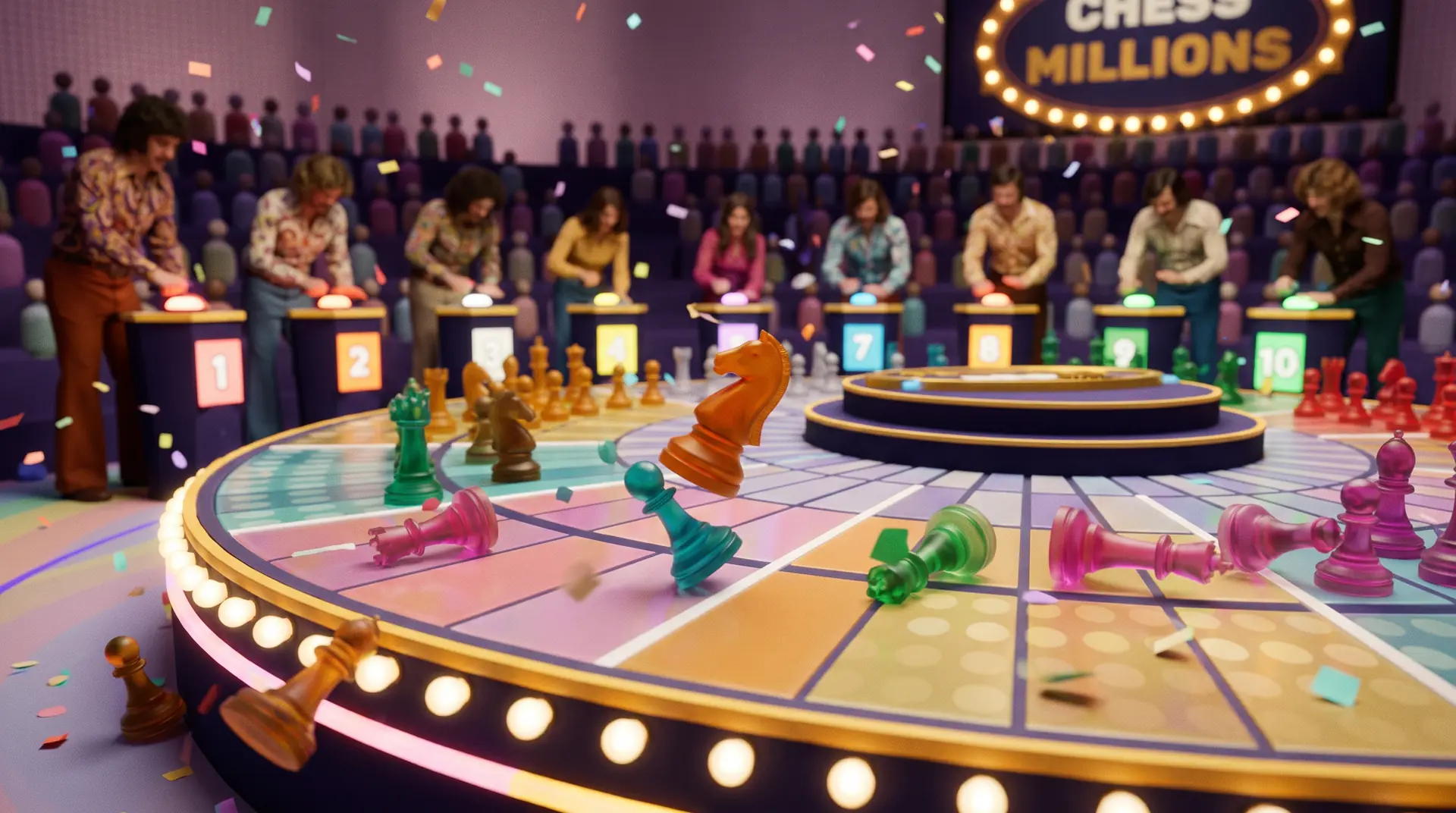
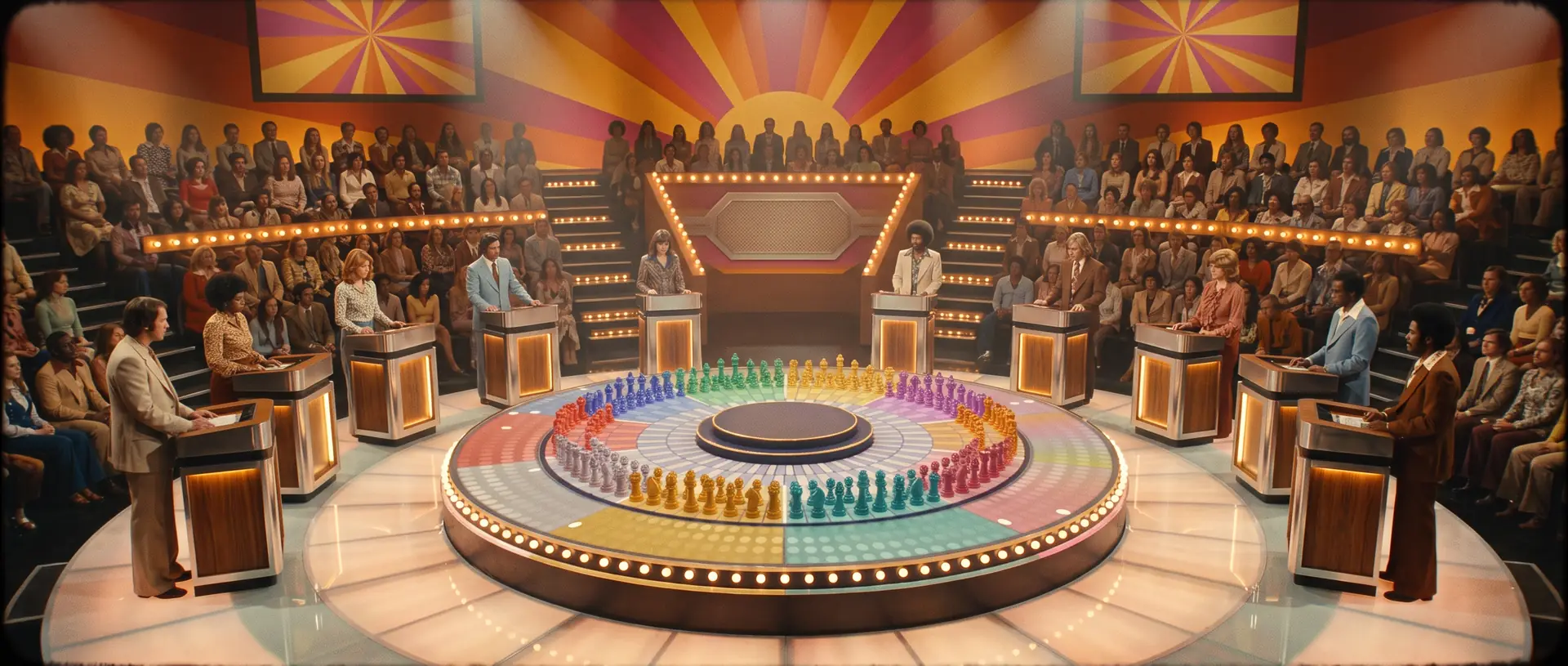
Pieces fly across the round board as ten contestants hammer their buttons

3 · Real time

Everyone moves at once

There are no turns. Move whenever you like; after a move, that kind of piece rests.

  • Banked moves. Each kind of piece holds 2 moves. Spend both for a double strike, then they refill one at a time.
  • Captures come cheap. Taking a piece costs only three quarters of a rest, so two hits in a row make a combo.
  • Heat. Move the same kind again while it's still refilling and its rest grows a quarter each time, up to double. Move something else, or let it refill, and it cools.
  • The show speeds up. Rests are 10% shorter in Round 2 and 20% shorter in the Final Round.

Rotate through your army: pawns, then a knight, then a bishop stays fast. Spamming one piece doesn't.

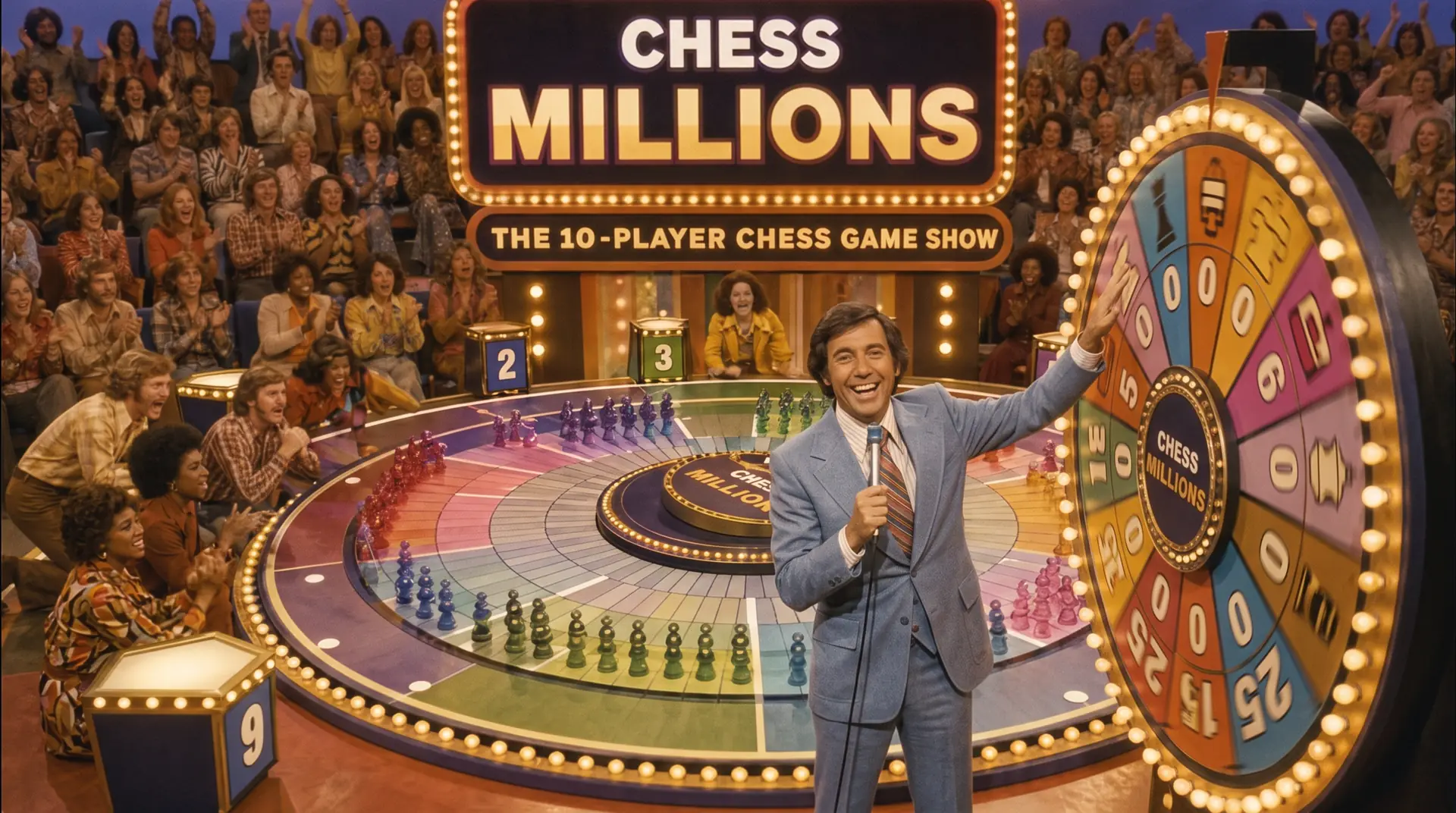
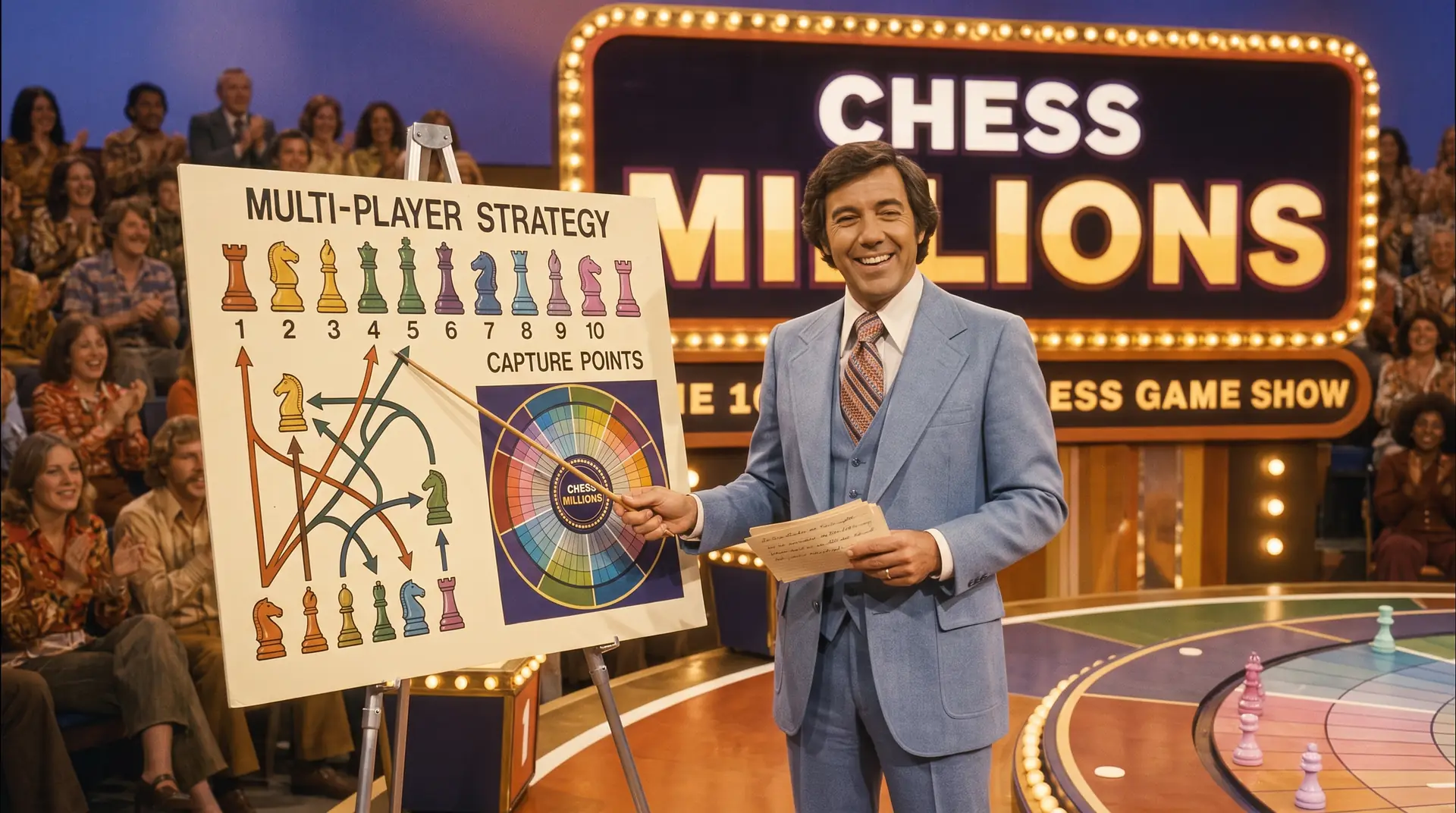
The host spins the prize wheel as the crowd cheers

4 · The prize wheel

Spin for the round's rule

Every round opens with a spin. Where it lands is the rule for that round, the same for everyone:

  • Knight NightKnights rest half as long.
  • Pawn StormPawns rest half as long.
  • Royal RushKings and queens rest half as long.
  • Long ShotsRooks and bishops rest half as long.
  • Double PrizesTwice the prize squares, back twice as fast.
  • Free HitsCaptures cost only half a rest.

Prize squares: gold squares appear in the middle rings, and the first piece to land on one wins a free move (it doesn't rest) or a clock reset (all your clocks are ready at once). Streaks: capture again within 8 seconds to build one; 3 in a row clears your heat.

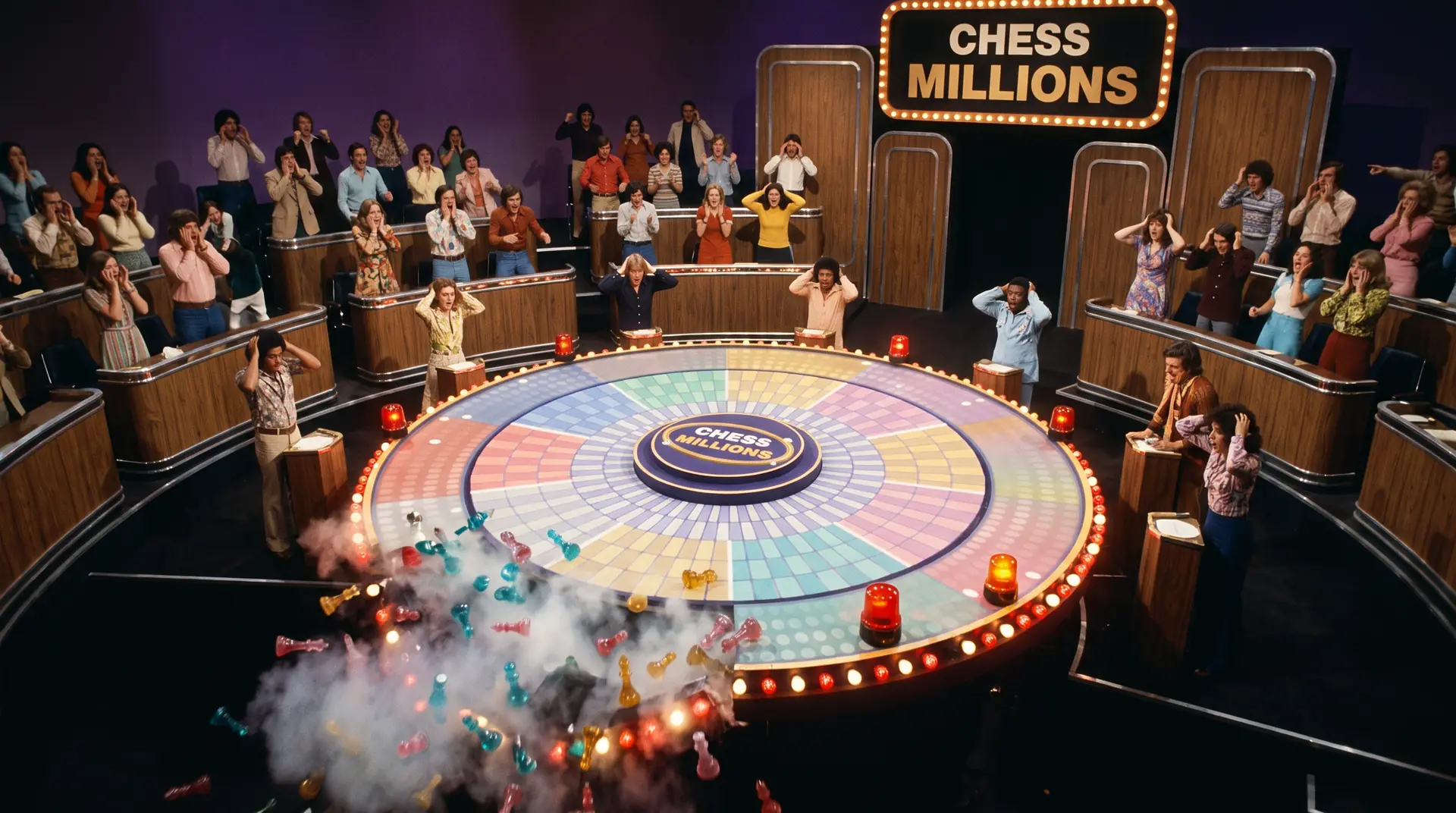
The outer ring of the stage falls away in a cloud of smoke and red warning lights

5 · The Final Round

The stage shrinks

From 4:00 it's the Final Round, and the stage closes in from the rim, one ring at a time: the rings fall at 5:00, 6:00 and 7:00. Each flashes red for a minute before it goes.

Every piece still on a falling ring leaves the show, and a king caught there takes its whole army with it. Nothing can move onto the fallen rings, so nobody can hide at home. Get your king in! The last ring standing becomes the new edge: a pawn that reaches it in another player's wedge still becomes a queen.

The Chess Millions marquee lights up over the round stage and its ten pastel armies

6 · Two ways to play

Real time, or classic

Prefer to think? Classic is the same show taken in turns round the table, a minute each: all the scheming of chess, with nine rivals watching your back. The stage still shrinks in a long game: from the fortieth lap of the table, a ring falls every five laps.

Wherever you play, look straight down on the board for the tactical view: the pieces become clear icons on a plain board, and the show's lights and warnings keep flashing round it.

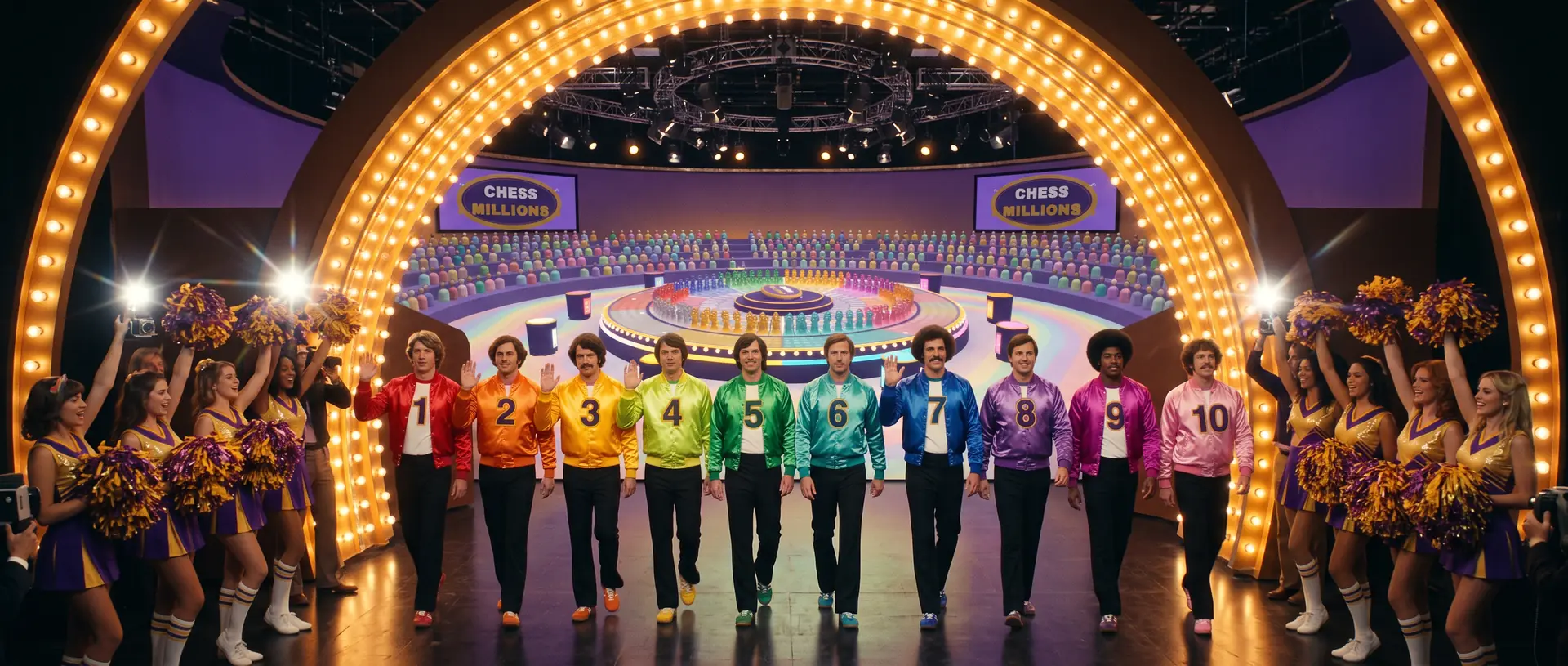
Ten contestants in numbered satin jackets walk out onto the studio floor

7 · Tournaments and rankings

The league

  • Tournament rules: the show with no prize wheel and no prize squares, so the chess decides it. Each tournament is real time or classic: its page says which.
  • Stages: up to ten people a table. Free tournaments put bots in any empty seats; ticket-entry and members' tournaments are people only, seated by rating with nothing drawn, evenly spaced round the board. The best-placed person at each table goes through, until one table is left: the final.
  • Rankings: every online match scores points by finish, 10 for first down to 1 for tenth. People only: bots never rank.
  • Your rating: every game under tournament rules moves it: ranked games in the lobby, and tournament tables. Finish above people rated higher than you and it climbs faster. It settles after 10 rated games.
  • Levels: every game you play earns XP, more for outlasting more of the table, and XP raises your level. Levels are bragging rights: they never decide who gets into a tournament.
  • Your page: your wins, podiums, average finish, rating, level and tournament history, for anyone to see.
See the tournaments

8 · Prize money

Playing for a prize

Every prize tournament shows its pool and how it pays before you enter: winner takes all, set shares for the top places, or the top part of the field.

  1. Enter for freeSign up on the tournament's page. Entry costs nothing while we test.
  2. Be there at the startOpen Play now at the start time and you're seated at a table automatically.
  3. Finish in the moneyWin, or place high enough, and your share of the prize pool is yours. The pool and how it pays are on each tournament.
  4. Claim it to PayPalClaim it on your Prizes page with your PayPal account's email, and it's paid into that account.

Prizes are for people 18 or older, and are paid into the winner's PayPal account, once their ID is checked.

The studio is open

Ready when you are

A show starts whenever you want one, right here in your browser. No download.